

Experience Design in Colleges: Building Pride and Belonging
When students walk into a college campus, their first impressions aren’t shaped only by faculty qualifications or rankings. They’re shaped by what they see, hear, and feel: the vibrancy of the corridors, the accessibility of information, the sense of belonging in shared spaces.
This is the power of experience design in colleges – an intentional approach to shaping physical and digital environments so that every interaction with the institution reinforces pride, identity, and community.
In an era where students are comparing your campus not just with other colleges but with global experiences they see online, experience design becomes a competitive differentiator.
What Is Experience Design in Colleges?
Experience design in higher education goes beyond brochures, websites, or a fresh coat of paint. It’s about:
- Telling the institution’s story visually through walls, bulletin boards, and displays.
- Making information accessible—from labs to classrooms to notice boards.
- Designing rituals and moments that create emotional connection (e.g., graduation wall, alumni stories, student showcases).
- Bringing digital and physical worlds together, with consistent identity across campus and online.
In short, it’s not decoration—it’s communication made experiential.
Example: EvolvEd × SFIT IT Department Floor
A recent example is our collaboration with the Information Technology Department at St. Francis Institute of Technology (SFIT), Mumbai.
The challenge:
The department had bulletin boards and computer labs, but they weren’t engaging students or reflecting the department’s strengths. The spaces looked purely functional, not inspiring.
The EvolvEd approach:
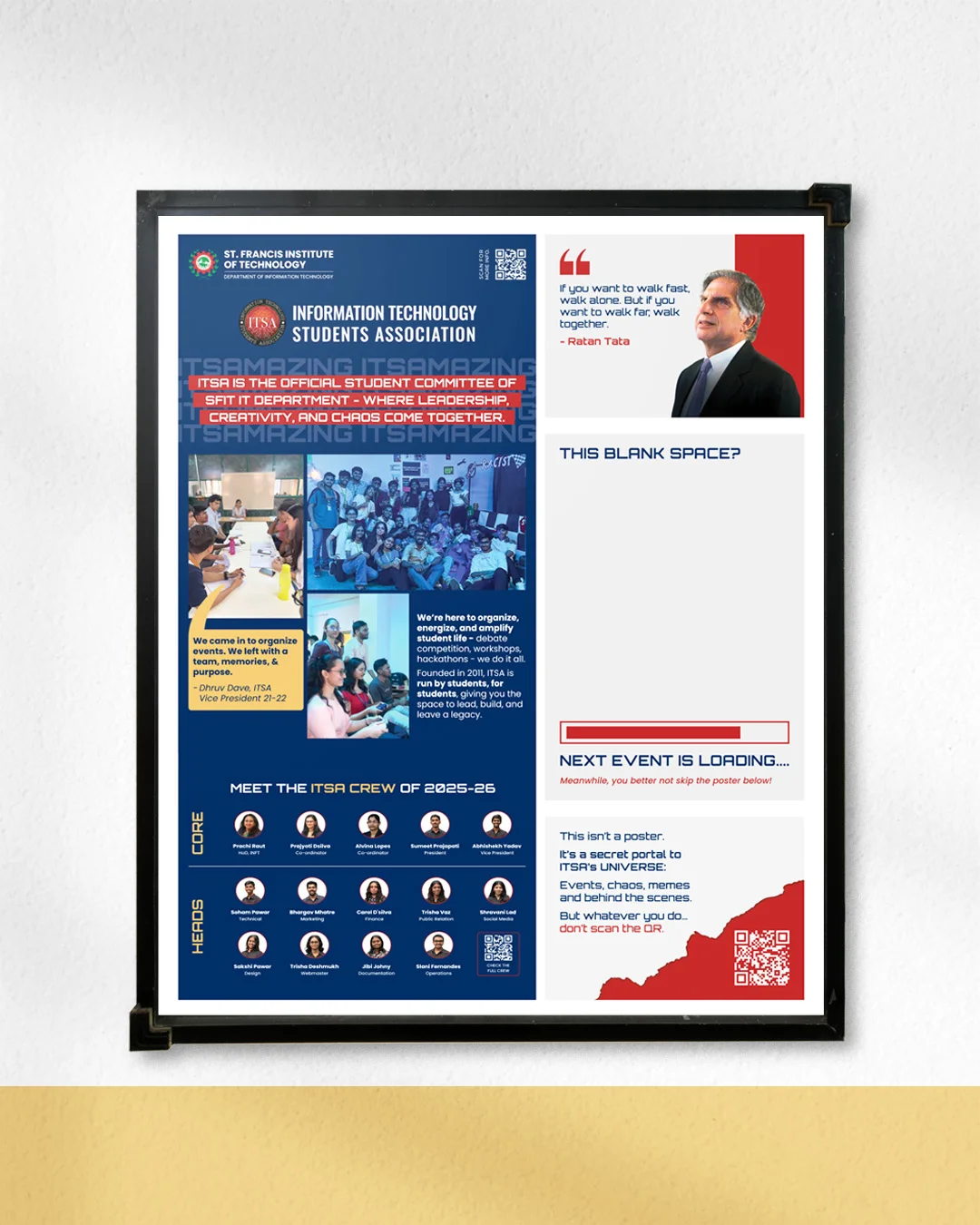
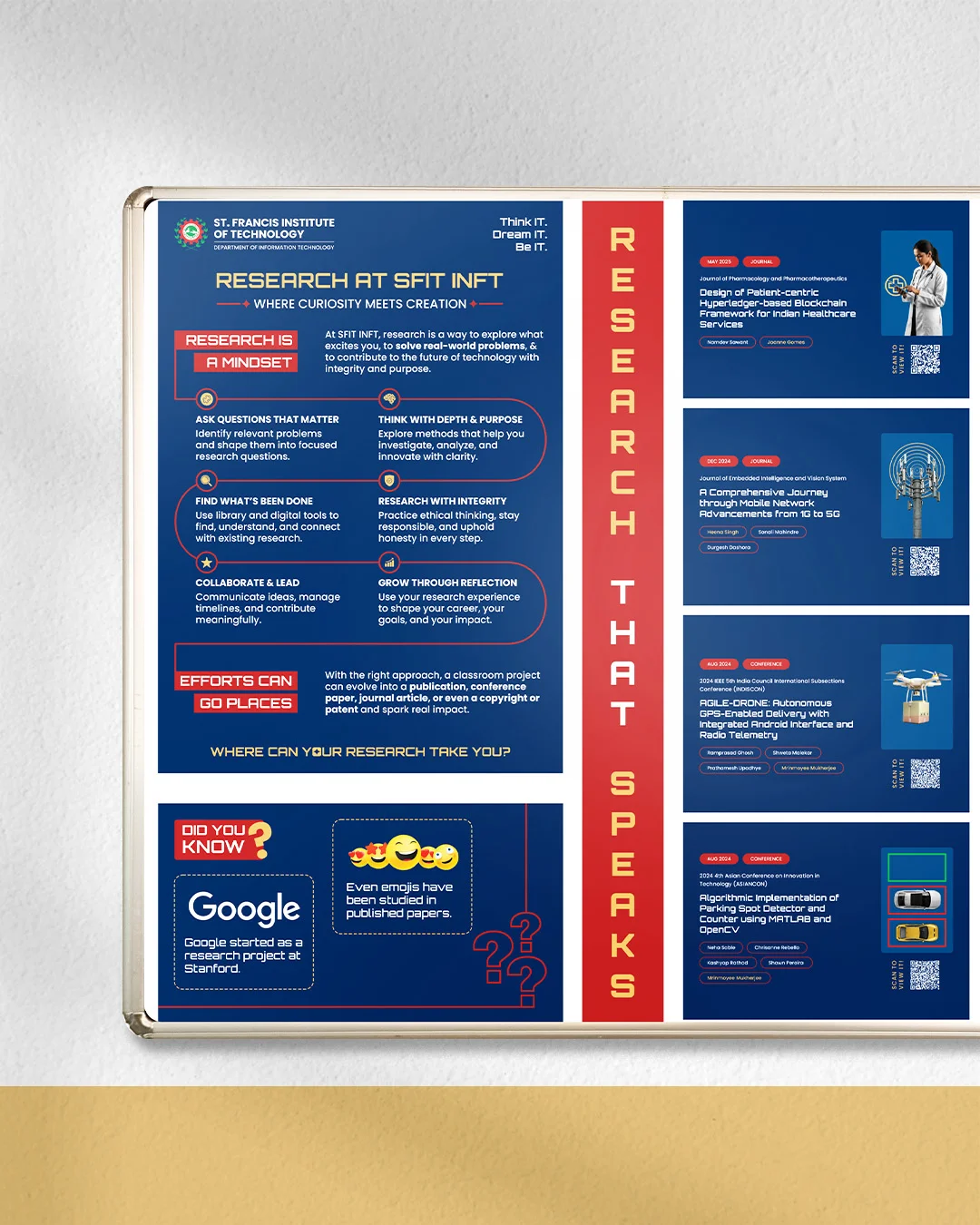
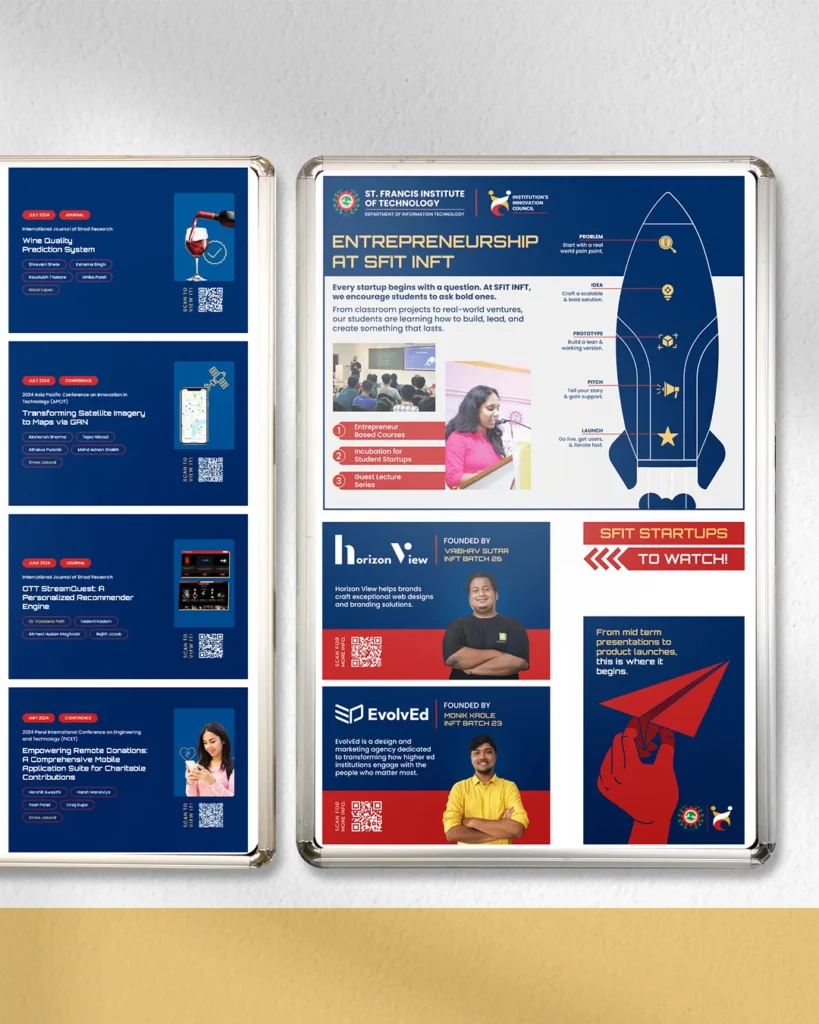
- We redesigned bulletin boards from static displays into story-driven spaces, showcasing achievements, industry updates, and student work.
- We introduced custom computer wallpapers across labs and classrooms, unifying the department’s visual identity.
- We created thematic design elements in corridors to reflect IT’s spirit of innovation and collaboration.
The outcome:
Students reported a stronger sense of pride in their department. Faculty found it easier to communicate updates. Visitors could “read” the culture of the department the moment they stepped onto the floor.
This is the essence of experience design: turning overlooked spaces into living narratives.
Elements of Effective Experience Design in Colleges
Every institution has its own culture, but some universal elements make experience design impactful:
- Visual Identity Integration: Consistency in logos, colors, and typography across campus and digital touchpoints.
- Storytelling Spaces: Walls and boards that highlight alumni success, student research, faculty contributions.
- Interactive Communication: QR codes leading to resources, digital kiosks for real-time updates.
- Student-Centric Zones: Lounges, labs, and discussion areas designed to foster collaboration, not just utility.
- Heritage + Modernity: Celebrating institutional legacy while signaling future readiness.

Stakeholders Beyond Students
Experience design isn’t only for current students. A well-designed campus touchpoint speaks to:
- Faculty: Recognition spaces that honor teaching contributions build morale.
- Alumni: Branded areas showcasing alumni achievements encourage giving back.
- Parents: An inspiring, professional environment reassures them about their child’s choice.
- Recruiters: A well-branded, modern campus reflects seriousness about placements and industry connections.
Why Institutions Need to Take This Seriously
- Admissions Impact: First impressions of campus tours can tip a decision.
- Retention: Students are more engaged when they feel connected to their environment.
- Brand Consistency: A strong physical experience strengthens digital campaigns.
- Community Pride: Faculty, alumni, and parents feel they are part of something bigger.
(Related: How to Build a Memorable Education Brand)
Conclusion: Designing for Pride, Belonging, and Connection
Experience design in colleges isn’t about fancy walls or décor. It’s about making the values, achievements, and aspirations of the institution visible and felt every day.
The SFIT IT Department floor transformation is one example of how simple design choices, bulletin boards, wallpapers, and visual identity can shift the way students, faculty, and visitors perceive a department.
As higher education becomes increasingly competitive, the institutions that win will be those that don’t just deliver degrees but deliver memorable experiences.
At EvolvEd, this is our core mission: to partner with colleges in India and beyond to translate identity into environments that inspire pride, belonging, and shared purpose.
If you’d like to see how experience design can reshape your campus, let’s connect.